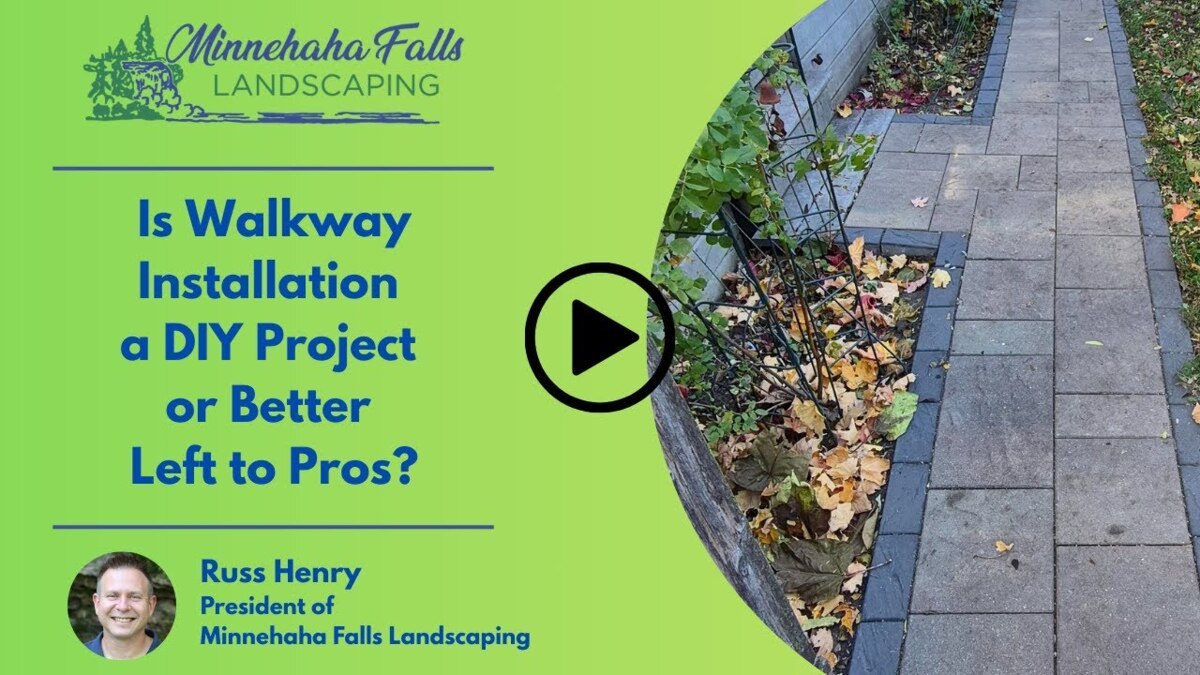
A walkway might seem like one of the simplest projects you can tackle outdoors. A few pavers, some stone, maybe a weekend of work, and you have a clean path from the driveway to the door. But in practice, walkways rarely fail because of how they look. They fail because of what’s happening underneath.
At Minnehaha Falls Landscaping, we’ve found that most walkway problems come down to pitch, drainage, and base preparation, not materials. A path that looks perfectly level can still collect water, shift during freeze–thaw cycles, or settle unevenly after just a couple of Minnesota winters. Before deciding whether walkway installation is a DIY job or something better left to professionals, it helps to understand what really goes into making one last.
What Most Homeowners Don’t See Beneath a Walkway
A walkway isn’t just pavers or stone sitting on the ground. It’s a small structural system that has to manage water, soil movement, and foot traffic over time. Underneath the surface, there’s:
- Excavated soil
- A compacted aggregate base
- Proper depth and compaction
- Consistent pitch for drainage
- Transitions to stairs, patios, or foundations
Even a slight miscalculation in slope can cause water to flow in the wrong direction. That’s not something you notice on day one, but it becomes obvious after a few heavy rains or a freeze. When the base or drainage isn’t right, the surface materials don’t matter. The walkway will eventually shift, settle, or heave. Industry standards recommend that bases should slope a minimum of 1.5% for drainage to promote proper runoff and prevent pooling.
Why Walkways Often Fail After a Few Minnesota Winters
Minnesota weather adds another layer of complexity. Water seeps into small gaps beneath the surface. Temperatures drop. The water freezes and expands. Then it thaws and settles again. This cycle repeats dozens of times each winter. Over time, that movement can loosen pavers, crack joints, create uneven edges, and cause sinking or lifting sections
What looks fine during installation can slowly change shape once the ground starts moving. That’s why successful walkway installation and repair in Minnesota starts with proper drainage planning and thorough base compaction before selecting stone or pavers. A walkway designed to manage water effectively is far more likely to remain stable and durable year after year.
What Professional Walkway Installation Actually Involves
From the outside, it might look like we’re simply placing materials. In reality, most of our time goes into planning and preparation. Before installation, we typically:
- Evaluate existing grades and slopes
- Determine how water currently flows across the site
- Plan proper pitch and transitions
- Prepare and compact the base correctly
- Ensure the walkway ties cleanly into stairs, patios, or foundations
- Consider how heavily the path will be used
This is where professional hardscape design makes a difference. The goal is a walkway that functions naturally with the rest of the property. When those details are handled well, the surface materials simply become the finishing touch.
Material Choices Matter More Than Most People Think
There’s also more variety in walkway materials than most homeowners expect. We regularly install:
- Concrete pavers
- Natural stone
- Pre-cut stone
- Irregular or natural-edge stone
- Modern or traditional patterns
Each material has different durability, maintenance, and aesthetic characteristics. We often encourage clients to visit suppliers and see options in person. Touching and comparing materials helps narrow choices based on look, feel, and expected use, not just photos.
When DIY Might Be Fine (And When It’s Risky)
Not every walkway requires professional installation. There are situations where a DIY approach can work well. Not all walkways need professional installation; some can be done DIY. However, even small projects should consider basic site analysis, especially for drainage, soil stability, and elevation changes.
DIY can make sense for:
- Short decorative garden paths
- Stepping stone trails
- Low-traffic areas without slope or drainage concerns
But the risks increase when:
- The walkway ties into stairs or patios
- Slopes or grade changes are involved
- Water tends to pool nearby
- The path will see heavy daily use
- Longevity and low maintenance are priorities
Once drainage or structural considerations come into play, the margin for error gets smaller. That’s typically when professional installation becomes the safer long-term choice.
Minnehaha Falls Landscaping Approach to Walkways
Our walkway design and installation starts with understanding the site, not picking materials first.
Our approach focuses on:
- Evaluating drainage and water movement
- Designing for proper pitch and grading
- Selecting materials that match your goals and traffic needs
- Preparing and compacting the base correctly
- Building for durability in Minnesota conditions
By slowing down the planning phase, we reduce the chance of surprises later. It’s a quieter approach, but it consistently produces better results. Walkways should feel effortless to use. If they’re built well, you never think about them again.
Thinking About a New Walkway? Start With the Right Planning
Walkways might seem small, but they connect the most-used parts of your home. Getting the pitch, base, and design right early helps avoid repairs, re-leveling, or replacement later. If you’re weighing whether your walkway installation should be DIY or professionally handled, contact Minnehaha Falls Landscaping today. We can review your site and help you make an informed decision. A short conversation upfront can help you make the right decision for your property and your long-term goals.