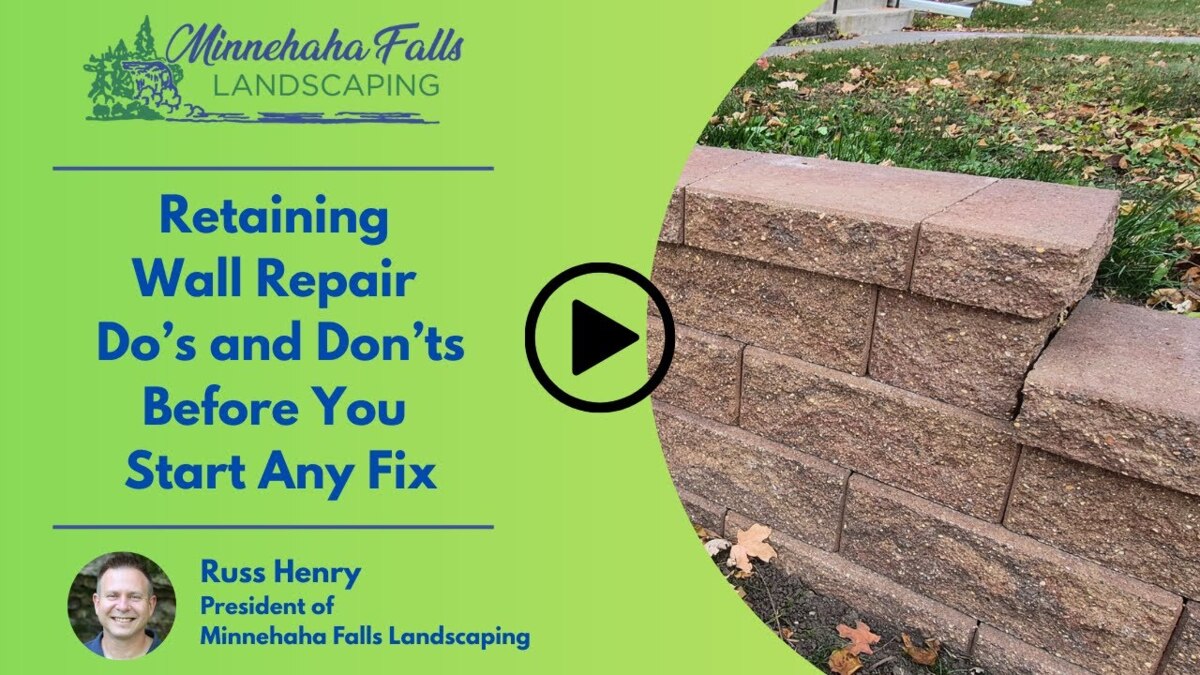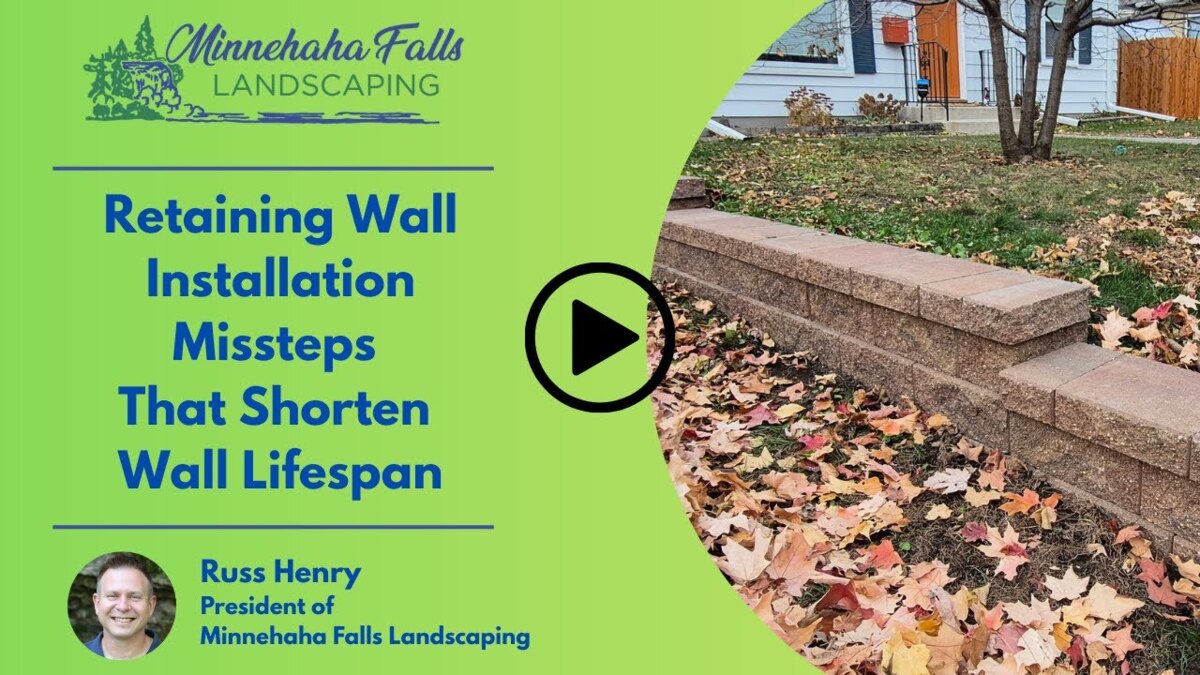
A leaning or aging retaining wall can make any homeowner uneasy. Sometimes the issue is cosmetic, a few blocks out of place or surface wear. Other times, it’s a sign of deeper structural stress that could become unsafe if ignored.
At Minnehaha Falls Landscaping, we approach retaining wall repair with one priority above everything else: safety. Before we ever talk about replacing blocks or patching sections, we evaluate whether the wall is stable, how water is behaving behind it, and whether the structure can realistically last. Not every wall needs replacement. But not every wall should be repaired either. Knowing the difference is what protects both your property and the people using the space.
How We Evaluate an Aging Retaining Wall
When we assess a retaining wall, we’re not just looking at appearance. We’re looking for signs that tell us how the structure is performing underneath the surface.
We check for:
- Visible leaning or bulging
- Movement when pushed
- Cracking or crumbling blocks
- Drainage issues behind the wall
- Erosion or soil washout
- Separation between courses
One of the biggest hidden risks is water pressure. Engineering guidance from the Federal Highway Administration notes that retaining walls must include proper drainage to relieve hydrostatic pressure, which can otherwise push walls outward and cause failure. In simple terms, trapped water builds force. Over time, that force wins. That’s why evaluation always comes before repair. Fixing the surface without addressing what’s happening behind the wall rarely solves the real problem.
Retaining Wall Repair DO’s
Some repairs are practical and can extend the life of your retaining wall when addressed early and with the right approach. Many common retaining wall installation mistakes stem from poor drainage or lack of structural support, which is why repairs should focus on stability and water management rather than just aesthetics.
What we recommend:
- Address small shifts or loose blocks promptly
- Improve drainage behind the wall when possible
- Replace isolated damaged sections before deterioration spreads
- Monitor movement over time
- Keep soil and runoff directed away from the structure
Addressing minor issues early leads to simpler and more affordable fixes, preventing larger structural problems later. Using the right materials and a solid base ensures your wall lasts longer and performs well.
Retaining Wall Repair Don’ts
We often see well-intentioned repairs that worsen the situation. Quick patches or cosmetic fixes may cover symptoms but rarely address the real cause.
What to avoid:
- Don’t ignore leaning or bulging sections
- Don’t stack new blocks over an unstable base
- Don’t patch cracks without addressing drainage
- Don’t rely on temporary shims or fillers
- Don’t allow unstable walls to be climbed or used
If you can push a wall and it moves, that’s a safety concern, not just a cosmetic issue. Temporary fixes might hide the problem, but can worsen it. Remember, what seems like a small DIY shortcut today can turn into a bigger, more expensive problem later.
When Repair Makes Sense (And When It Doesn’t)
There’s a clear line between repairable and replaceable walls. Sometimes, a minor adjustment is enough, but repeatedly patching a failing wall can delay the inevitable and raise costs. Understanding the condition early allows homeowners to invest in foundation protection, addressing underlying issues before they affect surrounding structures.
Repair often makes sense when:
- The issue is mostly aesthetic
- Damage is limited to small sections
- The structure is stable
- Drainage can be improved without rebuilding
Replacement is usually the better choice when:
- The wall is visibly leaning or bowing
- sections move when touched
- blocks are deteriorating or crumbling
- Drainage was never installed properly
- The wall is decades old and structurally compromised
Concrete and masonry products don’t last forever. Older materials, especially 30-40 years old, often break down beyond what spot repairs can realistically solve. In those cases, rebuilding isn’t overkill. It’s the safer, longer-lasting solution.
The Role Drainage Plays in Every Retaining Wall
The key to a retaining wall’s success or failure is drainage. Without proper drainage, water pressure builds behind the wall, causing cracks, bulging, and eventual collapse. Proper planning involves mapping water runoff to understand stormwater flow and redirect it as needed. By managing runoff and reducing pressure behind walls, contractors can prevent soil movement and ensure long-term structural stability.
That’s why modern retaining wall systems include:
- Gravel backfill
- A compacted base
- Drain tile behind or beneath the wall
- Drainage outlets or “windows”
When these elements are in place, water flows through and away from the structure instead of pushing against it. Most wall failures we see aren’t material problems; they’re water problems.
A Smarter Approach to Retaining Wall Repair and Stability
Our retaining wall installation approach is simple and methodical. We start with safety, then structure, then appearance.
We focus on:
- Inspecting stability first
- Identifying drainage performance
- Determining whether repair or replacement makes more sense
- Correcting underlying causes, not just symptoms
- Recommending solutions that hold up long-term
Sometimes that means a small, targeted repair. Other times, it requires rebuilding the wall with proper structural support and drainage from the ground up. Every decision we make focuses on ensuring a safe and stable hardscape installation that performs well for years, rather than just being a temporary fix.
Need a Retaining Wall Repair? Start With a Safe, Informed Assessment
Before attempting any fix, it’s worth stepping back and understanding what your wall is really telling you. A quick patch might seem easier today, but a proper assessment can prevent bigger repairs or safety risks later. If you’re unsure whether your retaining wall needs a simple repair or a full replacement, contact Minnehaha Falls Landscaping today. We’re always happy to take a look and walk you through your options so you can move forward with confidence.