
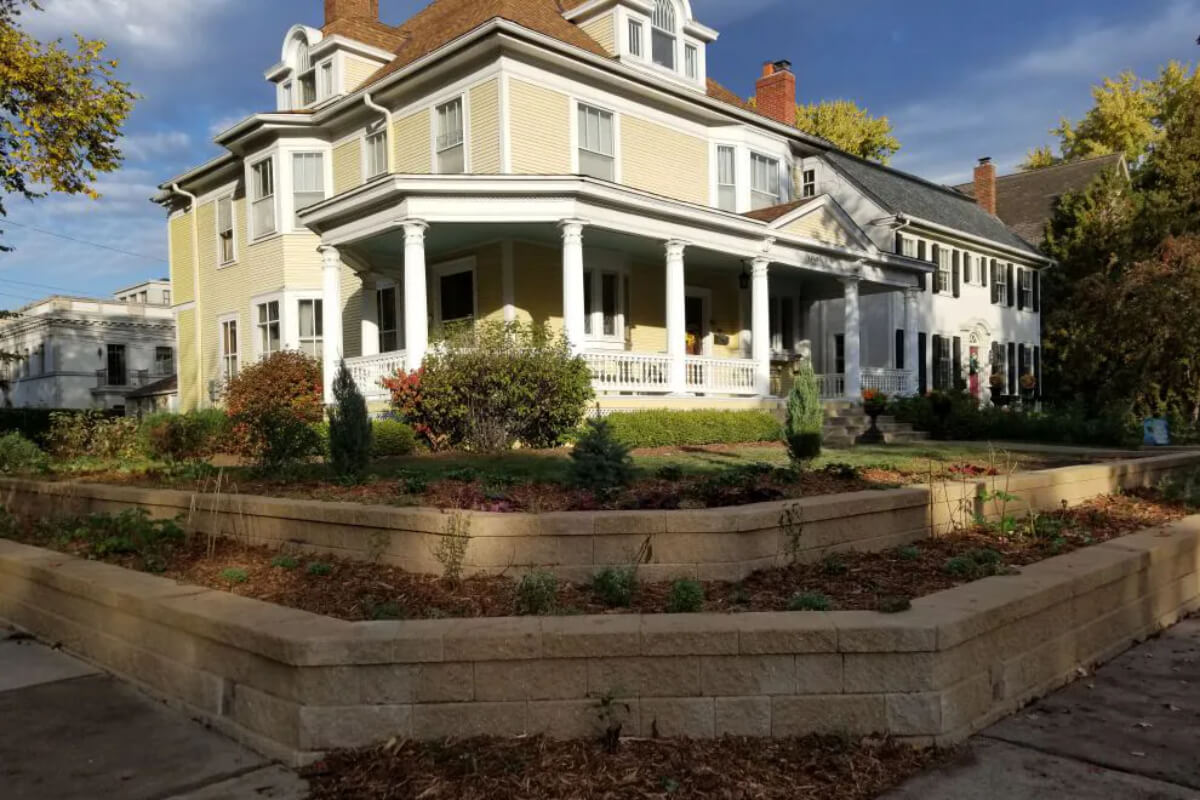
Retaining walls aren’t just functional landscaping elements; they can be stunning features that enhance your outdoor spaces. At Minnehaha Falls Landscaping, we often get questions about retaining wall cost and whether they are worth the investment.
Let’s explore what influences retaining wall cost and look at scenarios where installing one makes sense.
What is a Retaining Wall?
A retaining wall is designed to hold (or retain) soil behind it. We commonly use these walls in landscaping to address ground elevation changes and help prevent soil erosion. A garden retaining wall can also be a decorative element in your yard, adding functionality and beauty!
How to Calculate the Cost of a Retaining Wall
There are a few different factors that can influence retaining wall cost:
- Material. Common retaining wall materials include segmental block (engineered, interlocking concrete units), natural stone, and timber. Each has its own price range, with natural stone typically being the most expensive and timber the least.
- Size and Height. Unsurprisingly, taller and longer walls require more materials and labor, which can increase the overall cost.
- Site Preparation. If the area needs extensive grading, clearing, or drainage solutions, expect the costs to rise.
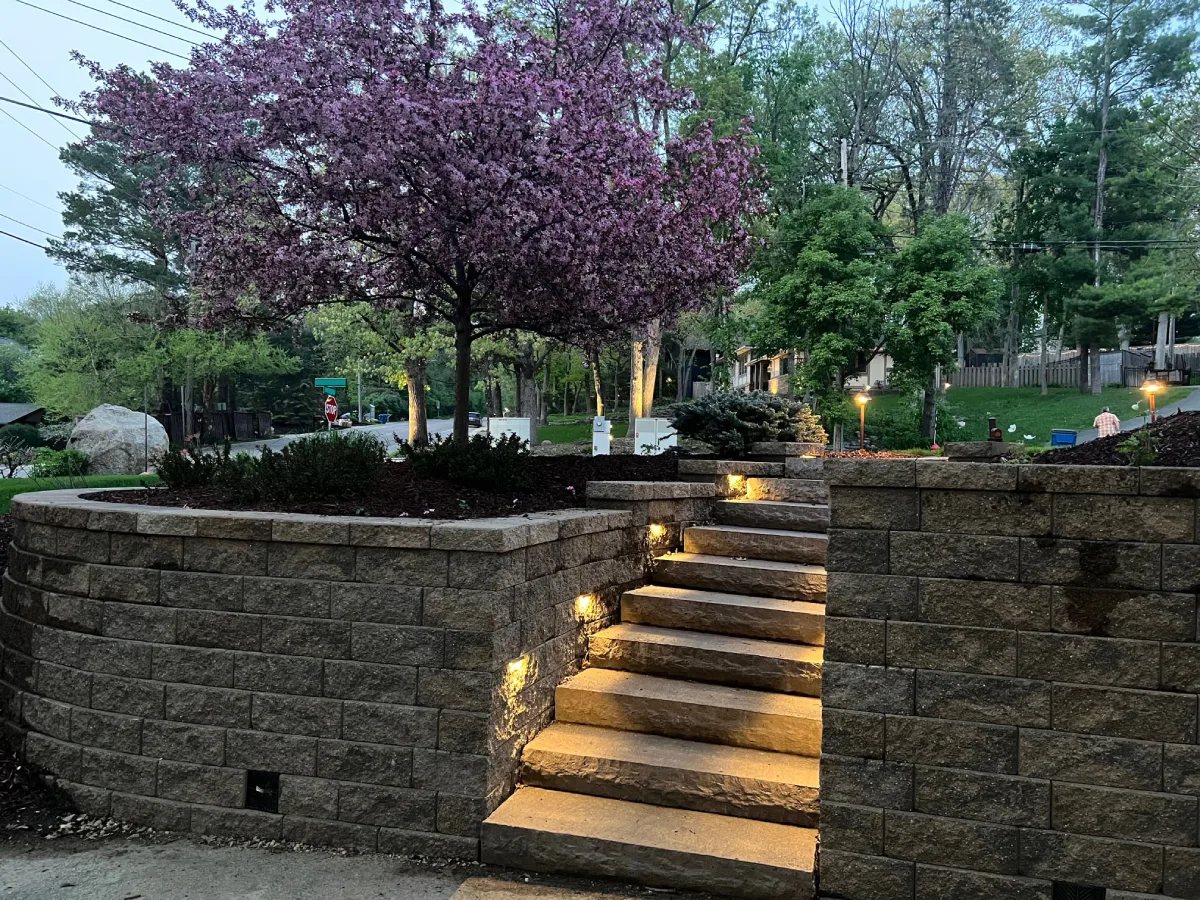
- Design Complexity. Simple, straight walls are cheaper to construct than those with curves, steps, or intricate designs.
- Labor. These costs vary based on the expertise required and local rates. Professional installation is recommended for most retaining walls to ensure stability and durability.
- Additional Features. Incorporating lighting, seating, or planters can increase the cost but also enhance the wall’s functionality and style.
Average Retaining Wall Cost Estimates
Most retaining walls are priced by the square foot of wall face, that’s the height of the finished wall multiplied by its length, measured on the visible front side. It’s not the footprint, the buried base, or the area behind the wall. As an example, a wall 4 feet tall and 25 feet long has about 100 square feet of face.
For a professionally built wall in the Minneapolis area, a realistic starting point is around $65 per square foot of wall face, and many projects run higher than that. Material, height, drainage, and site access all move the number:
- Segmental block wall: Roughly $65–$90 per square foot of face. A segmental block wall is our most common build. The segmental wall block units interlock and stack without mortar, flex with freeze-thaw movement instead of cracking, and offer the best balance of cost, durability, and design flexibility.
- Natural stone: Roughly $90–$150+ per square foot of face. Stone is the premium option, with cost driven by both the material and the hand-fitting labor it requires.
- Timber: The lowest-cost material upfront, but because of its short lifespan in our climate (see below), we rarely recommend it for a wall meant to last.
Please note: These are ballpark figures, your actual cost depends on your yard, the wall’s height, drainage requirements, and site access. Taller walls (generally over 4 feet) often need engineering, permits, and deeper footings, all of which raise the per-square-foot cost. A retaining wall is an investment in the form and function of your landscape.
Retaining Wall Replacement & Renovation Cost
If your retaining wall is leaning, cracking, bulging, or pulling away from the soil it holds back, you’re likely looking at replacement rather than repair. In Minneapolis, retaining wall renovation typically runs $75–$120 per square foot of wall face for full replacement, depending on the original wall’s failure cause, the material you choose (timber, segmental block, natural stone, or poured concrete), and whether drainage needs to be re-engineered behind the new wall. Replacement usually costs more per square foot than a brand-new wall because the failed structure has to be removed first.
Smaller cosmetic repairs such as resetting a few stones, patching a segmental block face, or addressing surface drainage can come in well under $1,500. But most failed walls in our climate need full rebuilds because the root cause is freeze-thaw movement, hydrostatic pressure, or undersized footings. Before quoting renovation, a Minneapolis retaining wall contractor will inspect drainage, soil conditions, and the wall’s structural integrity to determine if you need a repair, partial rebuild, or full replacement.
So, When is a Retaining Wall Worth the Investment?
Preventing Soil Erosion. As we mentioned above, one of the primary functions of a retaining wall is to prevent soil erosion. If your property is on a slope, a retaining wall can help keep the soil in place, protecting your landscape and home foundation from erosion. Investing in a retaining wall in such cases is not just worth it; it’s essential.
Enhancing Property Value. A well-designed retaining wall can significantly enhance your property’s curb appeal by adding structure, creating usable space, and becoming a focal point in your landscape design. This can increase your property’s value, making it a wise investment, especially if you plan to sell your home in the not-so-distant future!
Increasing Usable Space. For properties on uneven terrain, retaining walls can create flat spaces for gardens, patios, or play areas so you have more places to relax outside.
Solving Drainage Issues. Our retaining walls are designed for proper drainage, helping to manage water runoff and prevent water from pooling in undesirable areas. This can protect your property from water damage!
Beautifying Spaces. With so many materials and designs, retaining walls can be beautiful features that complement your home or business’s architecture.
What is the Lifespan of a Retaining Wall?
The lifespan of a retaining wall depends on the materials used, the quality of construction, and environmental conditions. Here’s a breakdown of the expected lifespan for various types of retaining walls:
Timber Retaining Walls
- Lifespan: 10-20 years
- Factors: Timber walls are more susceptible to rot, termites, and weathering. However, expert installation and diligent maintenance can extend their lifespan.
Segmental Block Retaining Walls
- Lifespan: 50-100 years
- Factors: Segmental block walls are highly durable and resistant to weathering. Proper installation with good drainage is crucial to prevent cracking or shifting.
Natural Stone Retaining Walls
- Lifespan: 50-100 years
- Factors: Natural stone is incredibly durable and can last for decades, especially when installed with adequate drainage.
In short, the key to longevity is choosing the right materials for your environment, going with high-quality construction, and performing regular maintenance.
Go Local With Minnehaha Falls Landscaping
Investing in a retaining wall can be a wise decision! It’s worth noting that areas with heavy rainfall or freeze-thaw cycles, like here in Minnesota, benefit from more precise and expert construction.
At Minnehaha Falls Landscaping, we pride ourselves on building durable, stylish walls that stand the test of time, keeping in mind your local environmental conditions and what you want out of your yard.
Contact our team today to discuss your project. We’re here to ensure your investment is well worth it.