Creeping Charlie can frustrate homeowners because it rarely stays where it started. It moves through turf, slips along lawn edges, creeps into shaded patches, and can make a traditional grass lawn feel like it is slowly being replaced.
At the same time, Creeping Charlie is often misunderstood. It can be aggressive where clean turf is the goal, but it may also function as a low-growing, naturalized plant in certain low-use or bee-friendly spaces. The right answer depends on what you want that part of the yard to become.
What Is Creeping Charlie?
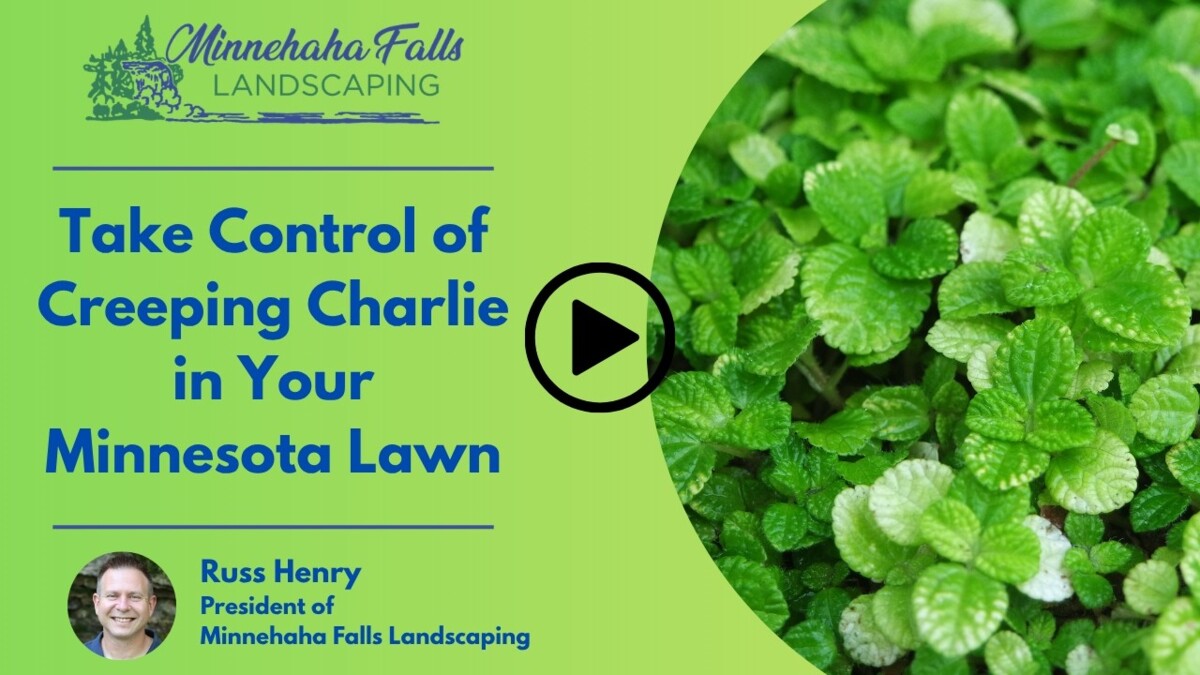
Creeping Charlie, or ground ivy, is a member of the mint family with scalloped, kidney-shaped leaves and small blue-purple flowers. The quickest way to confirm it is the stem: roll it between your fingers, and you will feel four square sides. University of Minnesota Extension classifies it as an unregulated invasive species, and it roots at the nodes as it spreads.
In traditional turf, that spreading habit can become a problem quickly. Once the plant is established, casual pulling or mowing rarely changes the long-term pattern because pieces can remain and continue spreading.
Why Does Creeping Charlie Spread So Aggressively?
Creeping Charlie spreads aggressively because it takes advantage of lawn areas where the grass is already weak. Shade, thin turf, moisture, and low competition can all make it easier for this groundcover to gain ground.
We often see Creeping Charlie become frustrating when it moves from a low-traffic shaded patch into the turf areas homeowners want to keep clean. Once it reaches lawn edges, beds, or open turf, the decision becomes less about one plant and more about the future of the space.
Thin Turf Gives It Room
Grass has to be dense enough to compete. When turf thins out, Creeping Charlie can move into the open spaces and spread across the surface. A lawn with bare or weak patches usually needs more than removal. It may need soil support, overseeding, and a maintenance routine that helps the grass become competitive again.
Shaded Areas Give Grass Less Advantage
Shade can make grass less vigorous, especially under trees, near fences, or along north-facing spaces. Creeping Charlie often tolerates those conditions better than turf. A homeowner may fight the same shaded patch for years without asking whether grass is the right goal for that area. Sometimes the answer is restoration. Other times, the answer is a different kind of planting or lawn system.
Should You Remove Creeping Charlie or Embrace It?
The choice depends on how the area is used and how formal the lawn needs to look. Creeping Charlie is a problem when it spreads through turf the homeowner wants to keep as grass, especially in front yards, play areas, or clean lawn spaces near the home. In lower-use areas, some homeowners may decide to tolerate or integrate it. A homeowner may view the same plant differently in a bee lawn edge than in a formal front lawn.
In practice, the call comes down to the setting. Where you want traditional turf, remove or reduce it. Where it is pushing into beds or a formal lawn, contain it at the edges. In low-use or bee-friendly spaces where it suits the look, let it stay. And where grass has never thrived, rework the area into something better matched to the site. A bee-friendly or naturalized lawn should still feel intentional. Acceptance works better when the area is edged, maintained, and clearly part of the yard’s design rather than simply ignored.
How Does Full Lawn Restoration Help Remove Creeping Charlie?
When Creeping Charlie has spread through most of a lawn, spot treatment alone may not be enough to bring back traditional turf. Full restoration may make more sense when the homeowner wants the area to return to grass.
Traditional turf rebuilding work can include reducing the existing plant pressure, improving soil conditions, reseeding or overseeding, and changing the mowing routine so grass can compete. Most of that comes back to feeding the soil rather than the grass, since thin turf is what lets it in. Restoration does not guarantee the plant will never return, but it gives turf a clearer path to recovery.
Can Creeping Charlie Fit Into a Bee Lawn?
Not really, and the reason is worth knowing. Extension notes that ground ivy does not have accessible pollen and is not a heavy honey producer, so the bee argument for keeping it is weaker than it looks. The flowers are pleasant in a naturalized corner, but that is an aesthetic choice rather than a pollinator one. A proper bee lawn is a different project.
A planned pollinator-friendly lawn system uses chosen species such as clover, self-heal, and creeping thyme, selected for how they look and behave together. Creeping Charlie may earn a spot in a naturalized corner, but it is no substitute for a bee lawn built to balance appearance, maintenance, and plant behavior.
When Is Creeping Charlie a Problem Beyond the Lawn?
Creeping Charlie gets harder to manage once it reaches garden beds, borders, or young plantings. Beyond the physical tangle, it is suspected of allelopathy, releasing compounds that suppress the growth of plants around it. That puts it in a different category from the weeds that are simply competing for space.
In those areas, containment matters. A plant that feels acceptable in a low-use lawn patch may become a problem when it competes with perennials, creeps through bed edges, or spreads into a space that was meant to have a cleaner planting design.
How Does Minnehaha Falls Landscaping Help Homeowners Decide?
We start with how the space actually gets used. A shaded corner, a formal front lawn, a bee lawn edge, and a garden border each call for a different answer. The answer changes based on:
- Whether the area should be traditional turf
- How aggressively the plant is spreading
- Whether it is moving into beds or borders
- Whether the homeowner wants pollinator-friendly lawn elements
- Whether restoration or acceptance will create a better long-term result
Minnehaha Falls Landscaping helps homeowners make a clear choice instead of fighting the same plant without a plan. In some yards, that means reclaiming turf. In others, it means shaping a lower-maintenance lawn direction around naturalized plants, bee lawn elements, or better-defined bed edges.
Reclaim the Turf or Rethink the Patch
Since 1957, Minnehaha Falls Landscaping has helped Twin Cities homeowners work through exactly these kinds of decisions. Our 100% organic, pesticide-free approach means we look at the site as a whole, soil conditions, shade patterns, turf density, nearby planting beds, and how the space is actually used, before recommending restoration, targeted management, or a shift toward a lower-maintenance planting design.
Contact Minnehaha Falls Landscaping if Creeping Charlie is spreading through your Minnesota lawn, and we’ll help you decide the right path forward, serving Bloomington, Eagan, Edina, Golden Valley, Minneapolis, Roseville, St. Louis Park, and St. Paul.