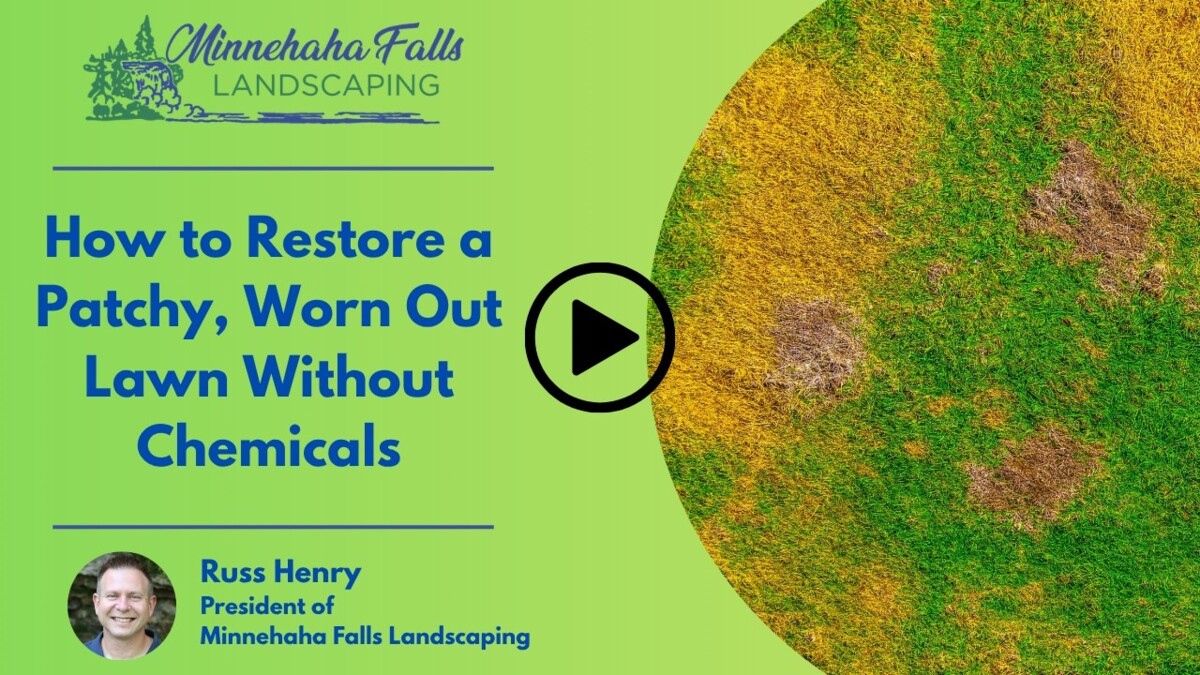
A patchy lawn can reach a point where the usual fixes stop working. Fertilizer may green up a few areas, mowing may make the yard look tidier for a day, and spot seeding may help temporarily, but the lawn still looks thin, tired, or uneven.
You can restore a patchy, worn-out lawn without chemicals, but the right path depends on how much healthy turf is left. Some lawns improve through steady organic restoration. Others need a faster renovation when weeds, bare soil, and compaction have taken over.
Why Do Lawns Become Patchy and Worn Out?
Patchy lawns are usually the result of several factors working together. Thin turf, compacted soil, shade, drought stress, foot traffic, pet activity, and inconsistent maintenance can all contribute to declining lawn density. Lawn diseases also weaken turf and leave bare or thinning areas. One often-overlooked factor is the natural turnover of perennial grasses. Individual grass plants have a limited lifespan, often around 4-7 years, and as older plants decline, new growth must fill in to maintain a dense lawn.
When a lawn becomes patchy, homeowners often assume it needs another product or treatment. But the underlying problem may be that too little healthy turf remains to recover on its own. A worn-out lawn needs renewed density, stronger root development, and improved growing conditions—not simply a quick fix that makes it look greener temporarily.
What Does It Mean to Restore a Patchy, Worn-Out Lawn Without Chemicals?
Chemical-free lawn restoration focuses on rebuilding the conditions that help grass compete. Instead of relying on a harsh reset, the plan may include soil support, aeration, overseeding, organic fertility, weed-pressure reduction, and better maintenance habits.
A soil-building foundation matters because patchy turf reflects what is happening below it. Shallow roots, compacted soil, or low organic matter will defeat new seed and existing grass alike. That is the difference between feeding the soil and feeding the grass.
What Is Moderate Lawn Restoration?
Moderate restoration is the gradual path for lawns that still have enough healthy turf to build on. It works across seasons through soil support, overseeding, fertility, mowing changes, and targeted weed reduction.
U of M Extension puts the dividing line around 30 to 50 percent: once that much of the lawn is dead or very sparse, or weeds cover that much of it, there is usually not enough turf left to fill in on its own. Below that, it works gradually. Timing matters as much as method. The best windows for overseeding are early spring as well as mid-August to mid-October.
This path is often more budget-friendly because it spreads the work out. The tradeoff is patience. Homeowners should expect incremental progress rather than a one-visit transformation.
Best for Lawns With Enough Turf to Build From
Some lawns respond well to a slower restoration plan because grass is still present across much of the yard. In those cases, the goal is to thicken the turf, reduce openings, and improve the root zone over time.
Moderate restoration may be a good fit when bare spots are limited, weeds are present but not dominant, and the homeowner can commit to ongoing care.
Why Patience Matters
Organic restoration depends on soil improvement and turf renewal, and neither is quick. Kentucky bluegrass alone takes two to three weeks just to germinate, before it starts competing with anything. The lawn is rebuilding from the roots up.
A steady plan may include seasonal overseeding, aeration when needed, organic fertility, and maintenance adjustments. Each step helps the lawn become less patchy and more competitive.
What Is Rapid Lawn Restoration?
Rapid lawn restoration is a more complete renovation for lawns that need a clearer starting point. It may be appropriate when the lawn has heavy weed pressure, widespread bare soil, severe thinning, or too little healthy turf left to recover gradually.
A faster reset can help homeowners move past years of patchwork repairs. It may involve reducing existing weed pressure, preparing the soil, reseeding or renovating the turf area, and setting up the lawn for better follow-up care.
Best for Lawns That Need a Fresh Start
A heavily worn lawn needs a reset once weeds, bare soil, and compaction have taken over. Which weeds matter here, since the aggressive spreaders require different prep than the ones that simply fill a gap.
Rapid renovation can be helpful when homeowners want a more visible reset and are ready to invest in a stronger starting point. It still needs realistic expectations because the new lawn has to establish and mature.
Why Follow-Up Care Still Matters
A one-visit renovation can change the starting conditions, but it does not remove the need for maintenance. New turf still needs watering, mowing at the right height, soil support, and protection from heavy stress while it develops.
Rapid restoration works best when the homeowner treats it as the beginning of a better routine, not the end of lawn care.
Moderate vs. Rapid Restoration: How Do You Choose?
The best restoration path depends on the lawn’s condition, the homeowner’s timeline, and how much change is needed. A lawn with scattered thin areas may not need the same approach as a yard where weeds and bare soil dominate.
| Factor | Moderate Restoration | Rapid Restoration |
| Lawn condition | Some healthy turf remains | Turf is heavily worn, weedy, or bare |
| Timeline | Gradual improvement over seasons | Faster reset with stronger starting point |
| Budget rhythm | Often spread out over time | More concentrated investment |
| Weed pressure | Manageable with targeted reduction | Often heavy enough to require broader prep |
| Best fit | Homeowners who can be patient | Homeowners who want quicker visible change |
| Follow-up needs | Consistent seasonal care | Careful establishment and maintenance |
This comparison helps set expectations before work begins. Neither path is automatically better. The right choice depends on whether the lawn can still be built up or needs a more complete reset.
How Does Minnehaha Falls Landscaping Plan Lawn Restoration?
As a 100% organic, pesticide-free lawn care company, we do not treat every worn-out lawn as a full renovation project. Some lawns need a careful long-term plan, while others are past the point where spot repairs make sense.
The restoration path depends on:
- How much healthy turf remains
- How much bare soil or weed pressure is present
- Whether compaction is limiting roots
- Whether the homeowner wants a gradual improvement or a faster reset
- Whether some lawn areas should become planting beds, paths, or bee lawn alternatives
Minnehaha Falls Landscaping builds restoration plans around the lawn’s actual condition. A custom lawn recovery plan may include moderate restoration, rapid renovation, organic fertility, overseeding, or weed-pressure reduction before reseeding. In some yards, replacing failed turf with a pollinator-friendly lawn alternative may make more sense than forcing grass to grow where it has always struggled.
Choose the Lawn Reset That Fits Your Timeline
A patchy, worn-out lawn does not always need the most aggressive fix, but it does need an honest read. If enough healthy grass remains, gradual restoration may be the better path. If weeds and bare soil have taken over, a faster renovation may save time and frustration.
Since 1957, Minnehaha Falls Landscaping has helped Twin Cities homeowners rebuild lawns without chemical shortcuts, using a 100% organic, pesticide-free approach that treats restoration as a soil-first process, not a product-first one. Contact Minnehaha Falls Landscaping if you want to rebuild a patchy, worn-out lawn without chemicals. We’ll help you compare moderate restoration, rapid renovation, and lawn alternatives, so your next step matches your yard, budget, and expectations.